
In footwear manufacturing, surface treatment may look like a small step before adhesive application. But it can affect bonding, shoe appearance, and daily production.
For shoe factories, brands, and buyers, choosing a primer should not start with only one question:
“Does it bond well?”
A better way is to look at two areas:
the final treatment result and the fit for mass production.
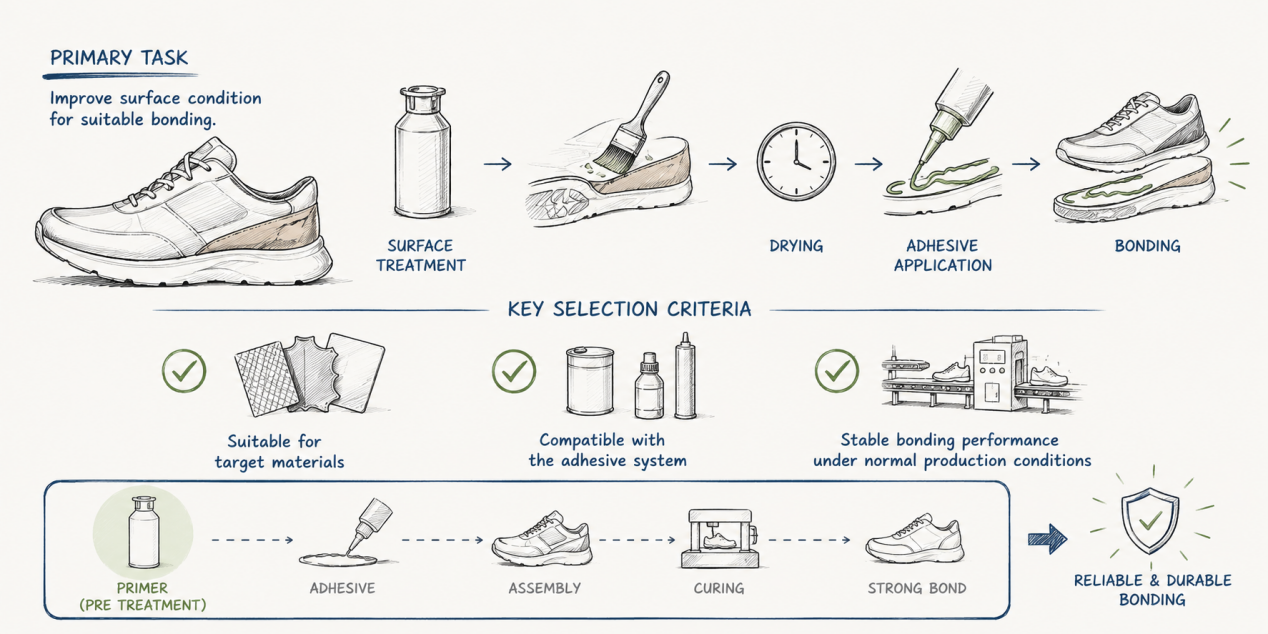
1. Treatment Results: Good Bonding and a Clean Appearance
1.1 Bonding Reliability: Can It Support Stable Bonding?
The basic job of a footwear primer is to prepare the material surface for the next bonding step.
When choosing a primer, do not look at only one test result. Check whether:
- it works with the target shoe material;
- it matches the adhesive system;
- it gives stable results under normal production conditions.
A primer does not work alone. It is one part of the full bonding system.
For example, PU adhesives for footwear manufacturing are often used for structural bonding, such as upper-to-sole applications. Surface treatment before adhesive application can therefore be an important part of the complete bonding process.
So, when judging a primer, the final bonding result still matters.
1.2 Shoe Appearance: Does the Treated Area Leave Visible Marks?
This point is easy to miss.
During manual brushing, it is difficult to keep the primer inside the bonding area every time.
If a conventional PU primer goes outside the bonding line, the exposed material may show:
- a different gloss;
- a visible surface change;
- a clear treatment edge.
This can be more noticeable on light-colored materials, exposed upper areas, or shoes with high appearance requirements.
A good primer should therefore do more than prepare the surface. It should also help reduce visible changes to the shoe material.
2. Mass Production Fit: It Must Work on the Production Line
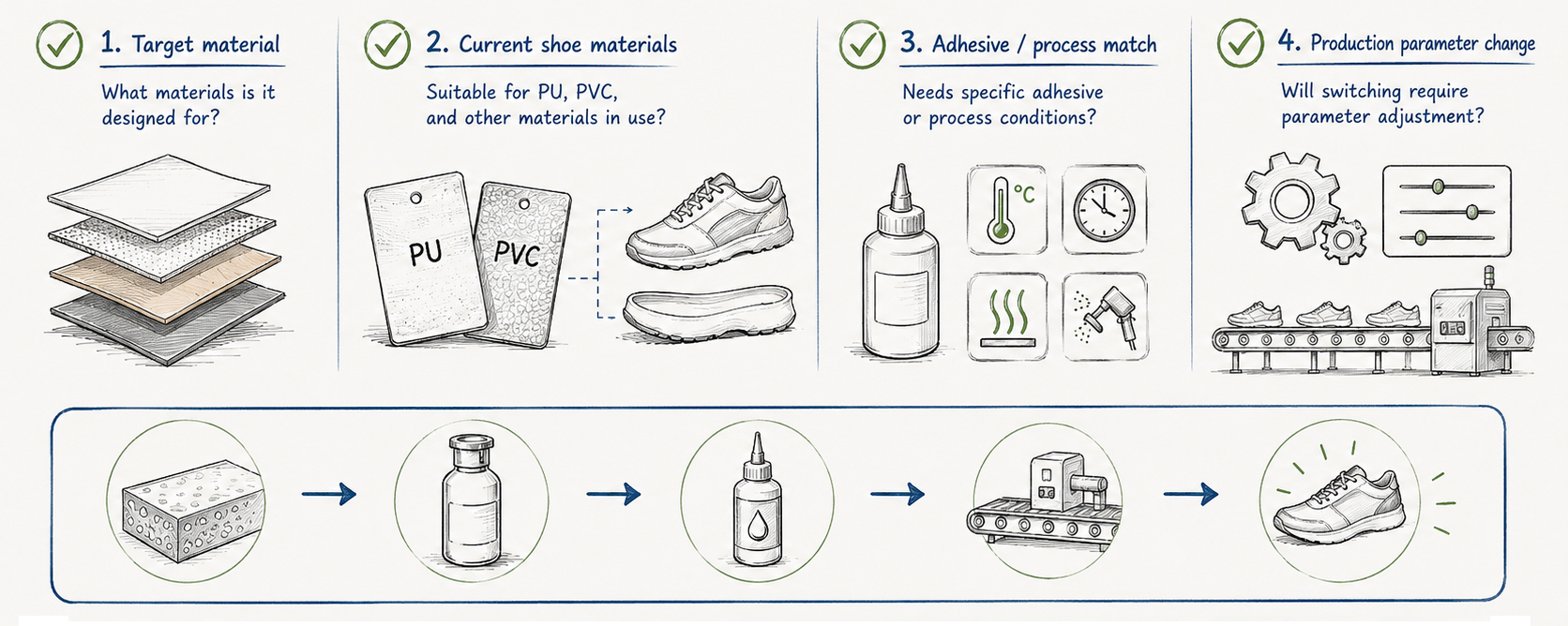
2.1 Material and Process Compatibility: Does It Fit Your Real Materials?
Different shoe materials have different surface conditions.
A primer should not be selected without checking the actual material and process.
Before buying, ask:
- What materials is the primer made for?
- Can it be used on the PU or PVC materials in your factory?
- Does it need a specific adhesive system?
- Will you need to change current production settings?
HELEY 792D3 is mainly designed for the surface treatment of PU and PVC footwear materials.
For a factory, the key question is not whether the product looks better on a data sheet.
The real question is:
Can it fit into the current production process with stable results?
2.2 Operator Experience: What Is It Like to Use Every Day?
A product may work well in a short lab test but feel very different during a full production shift.
One practical point is odor.
Conventional PU primers may have a stronger smell during use. This can become more noticeable when operators work with the product for a long time.
For general workplace reference, NIOSH provides guidance on organic solvents, including solvents used in adhesives and glues. Factories can also refer to OSHA ventilation standards when reviewing workplace ventilation.
So, when selecting a primer, factories should also consider:
odor, ease of use, and the experience of operators during continuous production.
These points may not appear in a shoe performance report, but they matter every day on the production line.
3. Real Test: Conventional PU Primer vs. HELEY 792D3
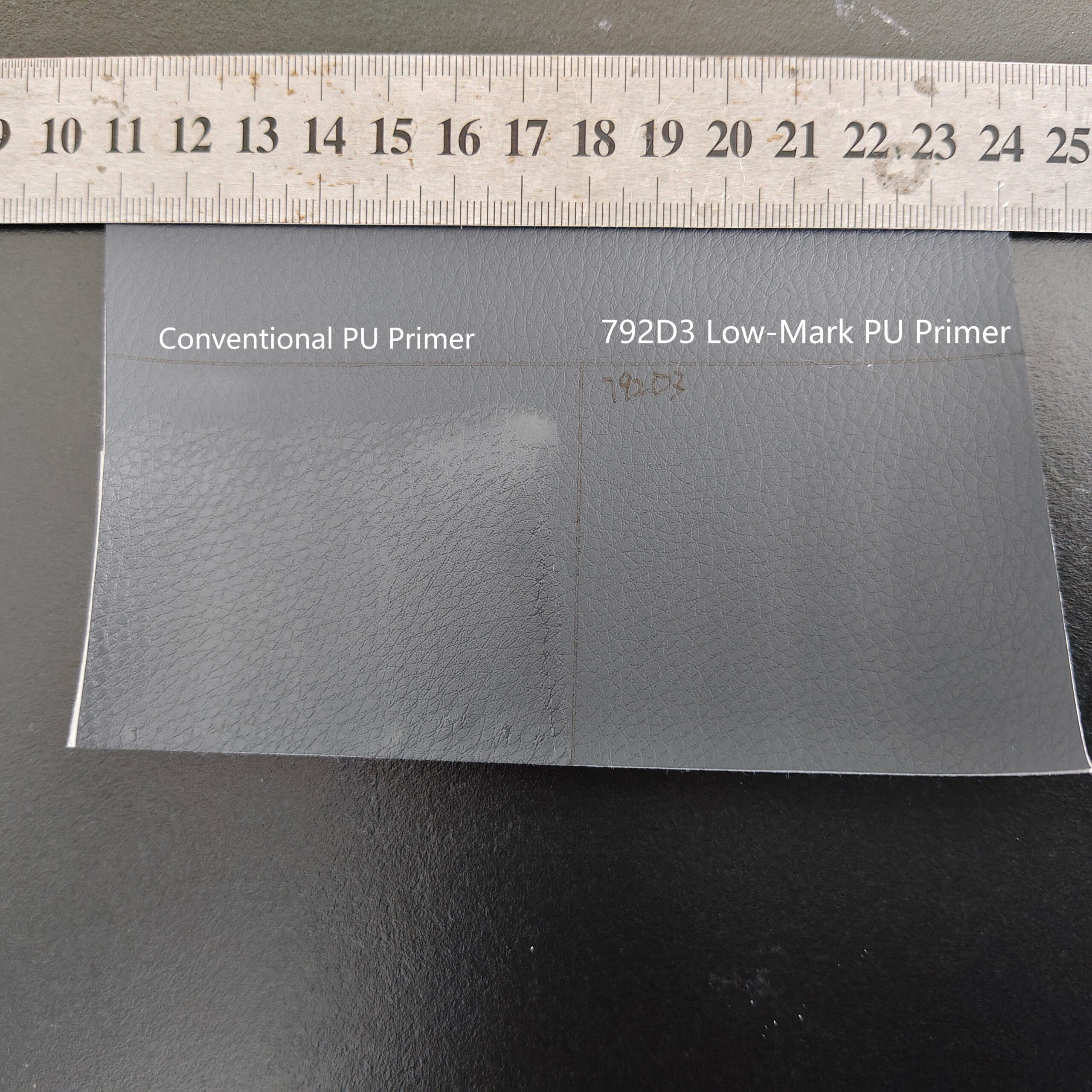
To make the difference easier to see, we applied a conventional PU primer and HELEY 792D3 to the same type of shoe material.
3.1 Appearance Test: Can the Material Keep Its Original Look?
The two primers showed a clear difference after surface treatment.
Conventional PU Primer: The Treated Area Is Easier to See
In the test sample, the area treated with the conventional PU primer shows a clearer change in gloss and surface appearance.
Under light, the treated area is easier to see. The treatment edge is also more visible.
In real production, this can become a problem when the primer goes outside the bonding area.
The visible part of the shoe material may show a treatment mark.
This is especially important for light-colored materials, exposed upper areas, and shoes with strict appearance standards.
HELEY 792D3: The Surface Looks Closer to the Original Material
The area treated with 792D3 shows better consistency with the surrounding material in color and gloss.
In the test sample, it is more difficult to see a clear difference between the treated and untreated areas.
This does not mean that the primer “disappears.”
Instead, 792D3 is designed to reduce obvious changes in gloss, color, and treatment edges.
For shoe factories, this can help lower the appearance risk when a small amount of primer goes outside the bonding area during manual brushing.
The key difference in this test is simple:
After treatment, how close does the material still look to its original appearance?
4. Four Questions to Ask Before Choosing a Footwear Primer
Before choosing a primer, shoe factories and buyers can ask four simple questions.
Can it support stable bonding?
Check bonding reliability.
Will it affect the final shoe appearance?
Check for visible gloss changes, marks, or treatment edges.
Does it fit my materials and current production process?
Check material and process compatibility.
What is it like to use every day?
Check odor and operator experience.
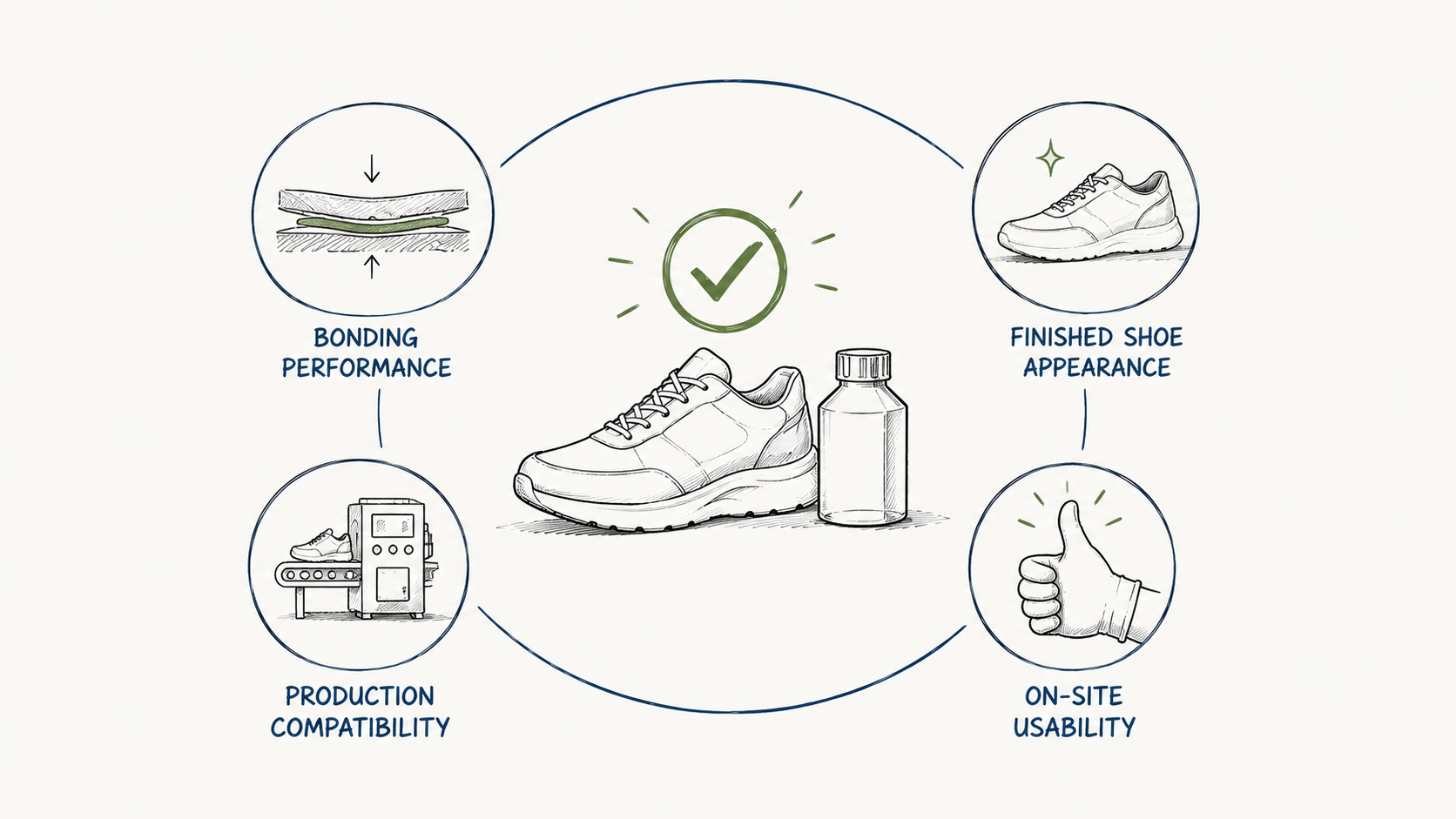
In footwear manufacturing, a good primer is not about having only one strong feature.
It should balance bonding performance, shoe appearance, production fit, and daily use.
Based on our current comparison, HELEY 792D3 shows two clear advantages: less visible treatment marks and a milder odor during application.
These small differences can become important when a product moves from a simple test to daily mass production.
5. The Right Primer Should Be Tested on Your Production Line
A primer should not be selected from a data sheet alone.
For shoe factories and brands, a better approach is to test it with real production materials, the current adhesive system, and the actual application method before moving to mass production.
HELEY 792D3 was developed for PU and PVC footwear materials, with a focus on reducing visible treatment marks and improving the application experience.
If your current process has problems with visible gloss changes, clear treatment edges, or strong odor during application, testing 792D3 on your own shoe material can give you a more direct answer.
There is no single “best” primer for every footwear factory. The right primer is the one that proves it can fit your real materials, process, and production needs.