
When distributors, trading companies, or downstream manufacturers visit an adhesive supplier, they often focus on visible factors such as equipment size, workshop layout, or production capacity. These aspects are important, but they still do not reveal the true stability of a factory. In a professional glue factory audit, what really determines long-term reliability is not just having machines—it is how those machines are controlled.
After governance and management systems, and after raw material supply chain control, the next critical layer of factory stability is process automation and the control system. These systems decide whether production is driven by repeatable industrial logic or by unstable human experience.
In this article, we explain why process automation matters so much in adhesive manufacturing, what a complete control system includes, how buyers can audit these systems on site, and what warning signs signal high operational risk. The goal is simple: help you judge whether a glue supplier is truly stable, scalable, and safe for long-term cooperation.
The Core Conclusion: Automation and Control Systems Decide Whether Stability Is Real or Accidental
The most important conclusion is this:
A glue factory without a real process automation and control system cannot deliver truly consistent batches, no matter how skilled its operators are.
Human experience can produce good results occasionally. Only a system can produce good results repeatedly, at scale, and under pressure.
A strong process automation and control system ensures:
consistent batch quality
locked production parameters
predictable output
safer solvent handling
fast root-cause tracing
stable production during staff changes
reliable scale-up capacity
Without these systems, production becomes fragile. When a key operator leaves, quality changes. When production volume increases, defects rise. When raw material properties fluctuate slightly, product performance drifts. This is why experienced buyers always include process automation and control system checks as a core part of a serious glue factory audit.
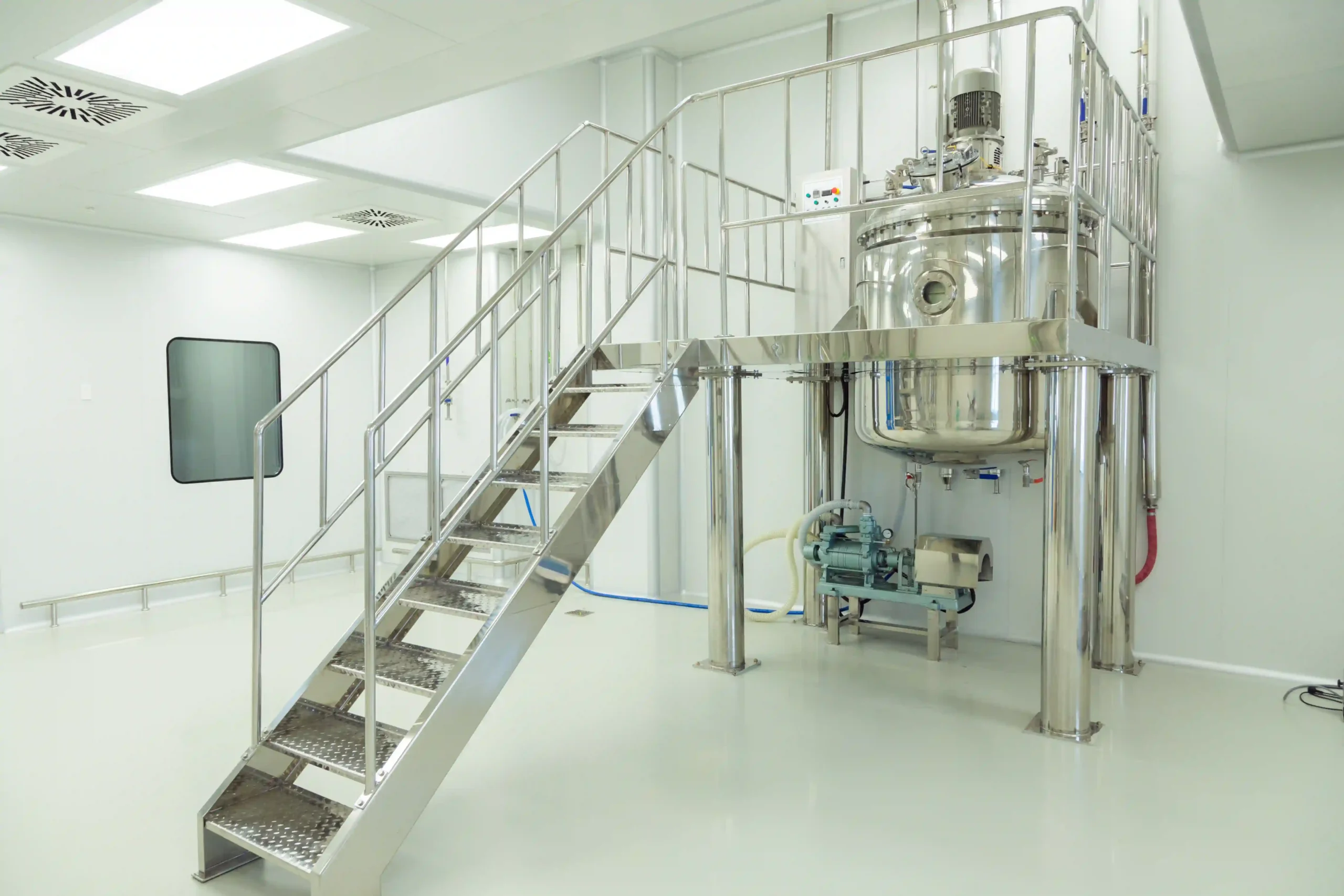
Why Process Automation Matters More Than Operator Experience
Adhesive manufacturing is not a simple mechanical process. It is a formula-driven chemical process where small deviations can lead to large performance differences. Relying on manual control introduces unavoidable risks.
Here is why process automation is more reliable than human experience:
1. Adhesive production is highly parameter-sensitive
Viscosity, solid content, bonding strength, open time, and curing behavior all depend on tightly controlled temperature, timing, mixing speed, and dosing accuracy. Human operators cannot repeat these parameters with perfect consistency across thousands of batches. Automated systems can.
2. Solvent-based production requires automatic safety logic
Many glue factories still produce solvent-based adhesives. This involves flammable vapors, explosion-proof zones, ventilation, and emergency shutdown logic. In such environments, automatic interlocks and PLC-controlled safety systems are not optional—they are essential risk barriers.
3. Batch stability depends on locked execution
If operators can freely adjust temperature, speed, or feeding rates, product properties will slowly drift. Only a control system that locks parameters and records all changes can ensure long-term consistency.
4. Continuous improvement depends on production data
Real process optimization requires historical temperature curves, mixing profiles, dosing records, and alarm logs. Without automated data collection, improvements rely on guesswork instead of facts.
For these reasons, process automation and control systems are a central focus in any professional glue factory audit. They determine whether production is controlled by science and systems—or by luck.
What a Complete Process Automation and Control System Includes
A true control system is not a single machine or screen. It is a layered structure that governs how every critical step of production is executed and verified. A complete system typically includes the following six pillars.
Pillar 1: Automated Dosing and Material Feeding
A stable glue factory uses automated systems to control:
liquid flow rates
solid material weighing
feeding sequence
tolerance limits
automatic recording of dosing data
Why it matters:
Raw material ratio is the foundation of adhesive performance. When feeding is manual, batch consistency depends entirely on operator accuracy and attention. Automated dosing removes this uncertainty.
Pillar 2: PLC-Controlled Critical Process Parameters
Key production parameters should be controlled by a PLC or DCS system, including:
reaction temperature
mixing speed
reaction time
heating and cooling rates
stage switching logic
Why it matters:
These parameters define the final properties of the adhesive. When they are controlled by a system, execution becomes repeatable. When controlled by people, variation is unavoidable.
Pillar 3: Human–Machine Interface (HMI) and Access Control
A mature control system includes:
HMI screens for real-time monitoring
user permission levels
password-protected parameter adjustment
full modification records
Why it matters:
This prevents unauthorized changes and creates full traceability for any parameter adjustment. Silent human modification is one of the biggest risks to batch stability.
Pillar 4: Automatic Process Data Recording
Strong factories automatically store:
temperature curves
rotation speed profiles
dosing times and quantities
alarm history
batch process logs
Why it matters:
If a defect occurs, data records allow engineers to identify exactly what went wrong. Without data, root cause analysis becomes speculation.
Pillar 5: Automated Filling and Weight Control
Modern glue factories use:
automatic filling machines
online weight checking
tolerance alarms
automatic rejection of out-of-spec containers
Why it matters:
Incorrect fill weight directly affects customer trust and can create legal disputes. Automated filling ensures every package meets declared quantity standards.
Pillar 6: Abnormal Alarm and Safety Interlock Systems
A true industrial control system includes:
over-temperature alarms
over-pressure protection
automatic shutdown logic
explosion-proof interlocks in solvent areas
emergency stop systems
Why it matters:
This is the last safety barrier between a process deviation and a serious industrial accident.

How to Audit Process Automation and Control Systems During a Glue Factory Audit
Process automation is not abstract. Buyers can evaluate it clearly during an on-site glue factory audit using simple but structured checks.
1. Review the Control Room and PLC Interface
Visit the control area. Look for:
live process monitoring screens
trend curves of temperature and speed
batch selection options
historical data access
A real system always displays real-time data and stored records.
2. Check Parameter Locking and User Permissions
Ask:
Who can change production parameters?
Are there permission levels?
Is every change logged automatically?
If any operator can freely adjust critical parameters without records, the control system is weak.
3. Verify Automated Dosing and Feeding
Observe how raw materials enter the reactor:
Is dosing automatic or manual?
Is weighing recorded?
Is there a system to prevent incorrect feeding?
Manual feeding signals higher batch variation risk.
4. Inspect Process Data Records
Ask for recent batch records:
Are temperature and speed curves complete?
Are time stamps continuous?
Are deviations visible and traceable?
Missing records indicate weak process control discipline.
5. Audit Filling Automation and Weight Verification
Check whether:
filling is automatic or manual
online weighing exists
overweight and underweight alarms function
correction actions are recorded
This affects both quality stability and regulatory risk.
6. Test Alarm Logic and Safety Interlocks
Ask how the system reacts to:
over-temperature
over-pressure
power failure
emergency stop activation
A professional factory can clearly explain and demonstrate these responses.
Red Flags That Signal Weak Process Automation
During a glue factory audit, the following signs strongly indicate high operational risk:
manual dosing for core raw materials
operators freely adjusting process parameters
no historical process curves
filling without weight verification
alarms that rely on human observation
safety interlocks existing only on paper
production depending on one “key operator”
noticeable batch differences between shifts
If multiple red flags appear, the factory’s stability is not protected by systems—it is protected by luck.
What Strong Process Automation Tells You About a Glue Supplier
A glue factory with a mature process automation and control system sends clear signals to buyers:
-
True Batch Consistency
Products remain stable across time, shifts, and production volumes. -
Lower Complaint and Return Rates
Most performance complaints originate from process variation. Automation minimizes this risk. -
High Safety Level
Automatic interlocks reduce the chance of fires, explosions, and chemical accidents. -
Fast Problem Resolution
Data records allow rapid root cause analysis instead of guess-based troubleshooting. -
Scalable Production Capacity
The factory can increase output without losing quality stability. -
Independence from Individual Operators
Quality depends on systems, not on who happens to be on duty.
For distributors, this means lower after-sales risk, stronger customer trust, and a far more predictable supply partner.
How Automation, Governance, and Supply Chain Form a Complete Stability Loop
From a professional audit perspective, factory stability rests on three connected layers:
Governance and Management System – sets the rules
Supply Chain and Raw Material Control – stabilizes the input
Process Automation and Control System – locks stable execution
Only when all three layers function together can a glue factory deliver real long-term consistency. This is why experienced buyers never evaluate automation in isolation during a glue factory audit.

Final Takeaway: Control Systems Decide Whether Quality Is Engineered or Accidental
In every serious glue factory audit, equipment size and production capacity are only the surface. The real question is whether the factory runs on industrial-grade process automation and control systems or on fragile human experience.
A strong control system means:
stable batches
controlled risks
repeatable performance
scalable output
professional safety protection
A weak control system means:
unpredictable quality
hidden safety hazards
rising complaints under volume pressure
high dependence on individual operators
In short:
Strong control systems create predictable adhesives. Weak control relies on luck.
For buyers, distributors, and brand owners, understanding process automation is not just a technical detail—it is a direct measure of supplier reliability and long-term partnership value.