
In the footwear industry, hydrolysis resistance has long been a key challenge for footwear adhesive performance.
In the past, when hydrolysis resistance was difficult to improve, many adhesives could not meet the needs of outdoor shoes, basketball shoes, sports shoes, and other high-performance footwear. Under heat, humidity, sweat, repeated flexing, and strong impact, shoes could face outsole separation, edge lifting, delamination, and bonding failure.
Today, shoe adhesive technology has improved. A good adhesive for shoe manufacturing can be designed for different shoe types, materials, and end-use conditions.
This progress comes from better formulas, better process control, and a deeper understanding of hydrolysis in real footwear applications.
So, is stronger hydrolysis resistance always better?
After technology upgrades, how should an adhesive system balance durability, material cost, and environmental value?

What Is Hydrolysis in Shoe Adhesive?
Hydrolysis does not mean the adhesive fails as soon as it touches water.
In footwear applications, hydrolysis is a slow weakening process. It happens when heat, moisture, sweat, and humidity affect the adhesive layer and the bonding interface over time.
When this happens, bonding strength may drop. The shoe may then show problems such as toe opening, outsole separation, edge lifting, or upper-to-sole delamination.
For high-demand shoes, these problems are not only surface defects.They may show that the adhesive system does not have enough long-term hydrolysis resistance.
Shoes are not static products. They are worn during running, jumping, sudden stops, climbing, bending, and long hours of movement. They also face sweat, rain, moisture, and temperature changes.
That is why outdoor shoes, basketball shoes, and sports shoes need stronger hydrolysis resistance from the adhesive system.
Why Hydrolysis Resistance Matters in Rubber Sole Bonding
In the past, many footwear manufacturers focused mainly on price, initial bonding strength, and production efficiency.
But the footwear market has changed.
Today, it is not enough for an adhesive to bond well at the beginning. It must also stay stable during real use.
Outdoor Shoes
Outdoor shoes may face rain, mud, wet ground, and rough terrain. The adhesive must keep stable bonding under humid and demanding conditions.
Basketball Shoes
Basketball shoes must handle sudden stops, jumping, twisting, impact, and high-frequency flexing. These movements put strong stress on the bonding area.
Sports Shoes
Sports shoes face sweat, heat, moisture, and repeated movement. Long-term adhesive stability directly affects the durability of the shoe.
In these applications, rubber sole bonding is not just one step in production. It is a key factor that helps the shoe keep its structure during real-world use.
For a professional shoe adhesive factory, hydrolysis resistance is not only a test result. It is part of the full bonding solution for demanding footwear production.
Our Hydrolysis Resistance Test for Shoe Adhesive
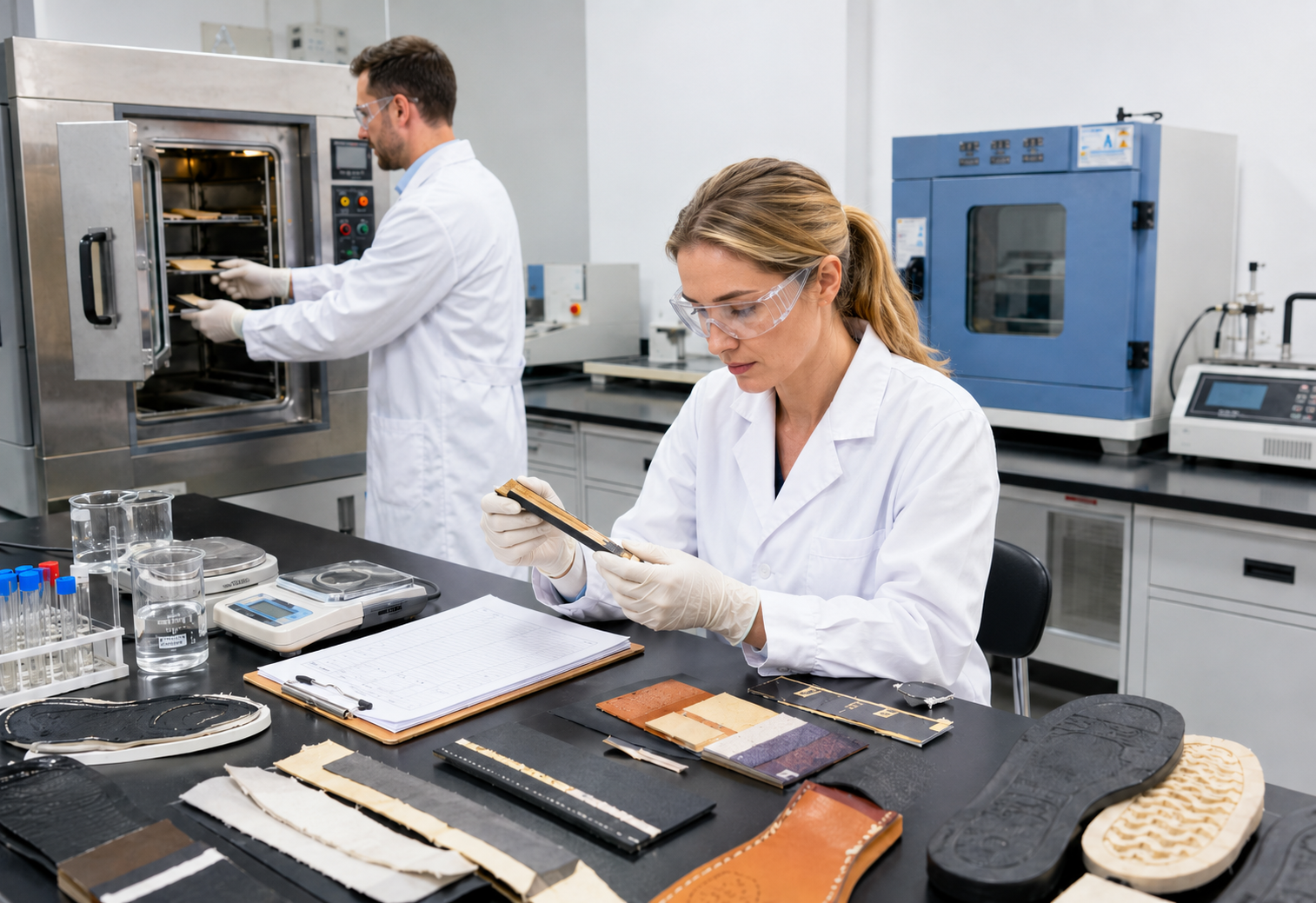
Unlike the “constant temperature jungle test” often used for synthetic leather materials, our shoe adhesive is tested in a constant temperature and humidity chamber.
The test conditions are:
70°C Temperature
95% Humidity
10 Days Testing Standard
Under these conditions, our adhesive successfully reached the required hydrolysis resistance test standard.
This test is not only for marketing.. It is used to check whether the adhesive can still keep stable bonding performance under high temperature and high humidity.
For outdoor shoes, basketball shoes, and other demanding footwear, hydrolysis resistance is not mainly about sea shipping or long-term storage.
Its real value is in actual wearing conditions.
5 Reasons Stronger Hydrolysis Resistance Is Not Always Better
Not always.
In industrial footwear production, stronger performance does not always mean better material design.
If hydrolysis resistance is far beyond the real service life of the shoe, it may increase material cost. It may also lead to over-engineering.
A mature adhesive for shoe manufacturing should not only chase higher numbers. It should match the right level of hydrolysis resistance with the shoe type, material structure, and real use environment.
1. Casual Shoes Need Daily Stability
Casual shoes need stable bonding for daily wear. They may not need the same level of resistance as outdoor or sports footwear.
2. Basketball Shoes Need Dynamic Strength
Basketball shoes need stronger resistance to flexing, sweat, impact, and dynamic stress.
3. Outdoor Shoes Need Moisture Resistance
Outdoor shoes need higher resistance to rain, moisture, wet ground, and complex environments.
4. Higher Performance Can Increase Cost
If the adhesive performance is higher than the product needs, material cost may rise without bringing real value to the final shoe.
5. Over-Engineering Can Create Waste
When a product is designed far beyond its real use life, it may use more resources than necessary.
Different shoes need different durability levels.
The goal is not to make hydrolysis resistance as strong as possible. The goal is to find the right balance between durability, cost control, production efficiency, wearing performance, and environmental value.
Hydrolysis Resistance and Environmental Value
https://heleyadhesive.com/sustainability/
Environmental value is not only about low odor, low VOC, or fewer harmful substances.
From the product life cycle, reducing bonding failure, rework, and early product waste is also part of environmental responsibility.
If a pair of shoes is discarded early because of adhesive failure, the upper, outsole, labor, energy, and raw materials are all wasted.
In this way, unstable quality is also hidden waste.
Good hydrolysis resistance helps shoes last longer. It reduces the risk of debonding, rework, and early disposal. It allows materials to deliver more value during the full product life cycle.
So, hydrolysis resistance is not the same as environmental protection.
But it can support deeper environmental value by improving product durability and reducing unnecessary waste.
A Better Footwear Adhesive for Real-World Applications
The improvement of hydrolysis resistance is not only an upgrade in adhesive performance. It also shows a deeper understanding of real footwear applications.
Shoes are not lab samples.
They are worn for running, jumping, bending, sweating, walking in the rain, and moving through complex environments.
A truly high-quality footwear adhesive should not only bond firmly at the beginning. It should also bond stably, last longer, and fit the real use scenario.
For industrial rubber sole bonding, hydrolysis resistance is not just a technical parameter. It is a key foundation for durable footwear manufacturing.
As a professional shoe adhesive factory, we believe the value of hydrolysis resistance is not to make the adhesive look stronger. It is to make every pair of shoes more reliable in real-world conditions.
