
Shoe factories can cut bonding costs by checking three things: supplies, labor, and losses from failed bonds. The price of glue is only one part of the bill.
Keep normal supply and labor costs separate from extra repair and scrap costs. This avoids counting the same cost twice.
1. Supply Costs: What Shoe Factories Use
Check Glue Cost per 100 Pairs
A low price per kg does not always mean a lower cost per pair. Compare glue use per 100 pairs for the same shoe type and quality target.
Record glue issued, glue left, and waste. Then multiply the amount used by the price per kg. Use the coating process approved for each glue.
Add Primer and Other Supplies
A primer is a liquid put on a surface before glue. Track its cost on its own, along with other supplies.
For shoe factories using several materials, keep a separate record for each one. Review the glue and primer options, then check which ones suit each material and process.
2. Labor Costs: Time Spent on Each Task
Time the Bonding Steps
Time the work needed to apply primer, spread glue, and press the parts. Choose a batch that reflects daily work.
In small shoe factories, one worker may handle several tasks. Log the time for each task to see which steps take the most work.
Cut Setup and Moving Time
Keep tools close, label batches, and place parts in the order they are used. These changes can cut trips and delays.
Count only the time that ties up staff. If glue dries while a worker does another job, do not count that whole wait as labor.
Time saved does not always cut wages. For a small team, it may free staff for more work.
3. Quality Losses: Extra Costs from Failed Bonds
Test a New Process Before Use
Before shoe factories remove the primer step, the bond must still meet the buyer’s needs. Surface prep depends on both the material and the glue, as SATRA explains.satra.com
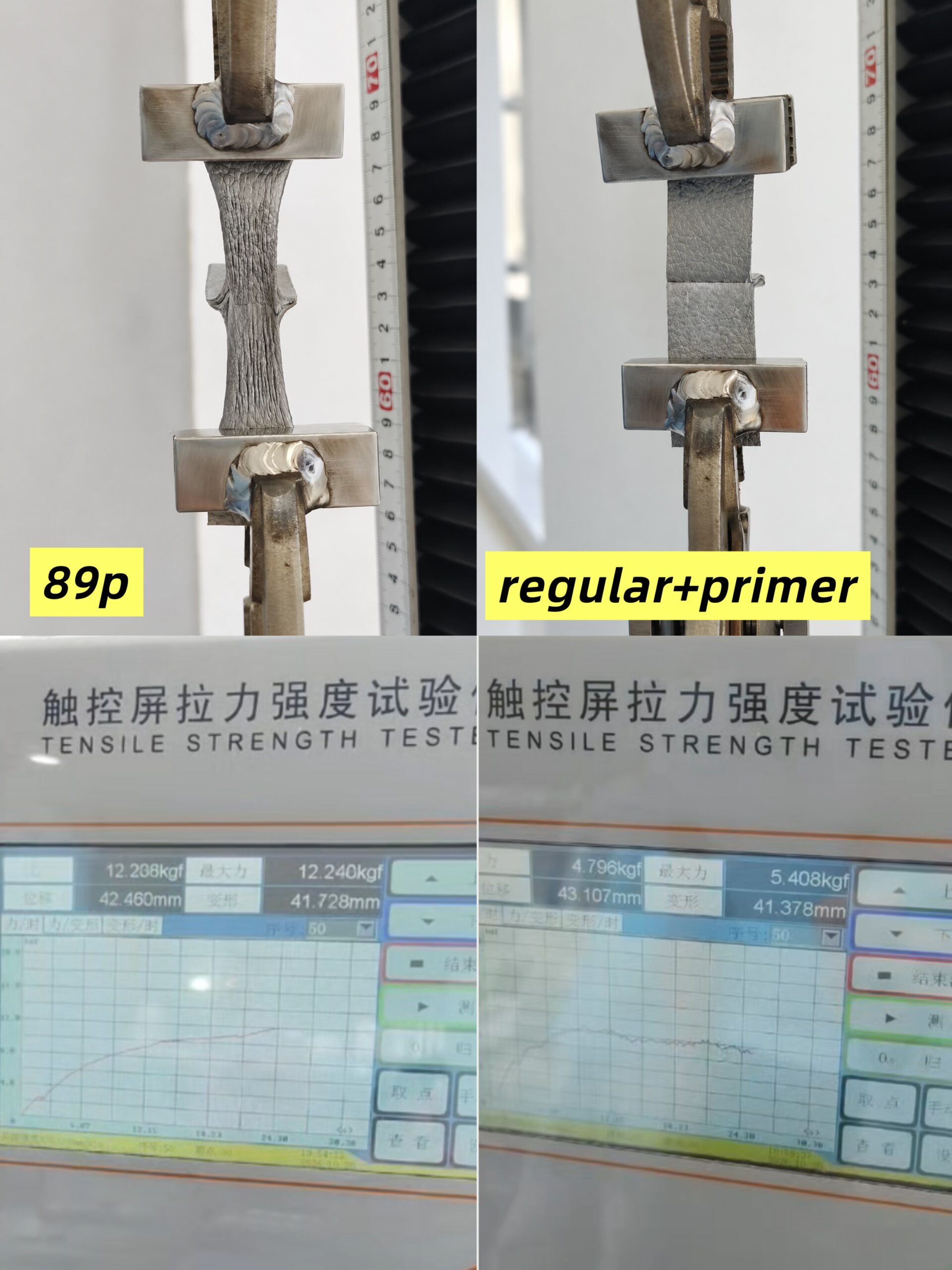
For suitable PU/PVC materials, glue that works without primer may help cut one step. HELEY 89P is one example. The records below show material A with 89P alone, and material B with regular glue plus primer.
The values come from the test screen photos. The last row describes what is visible in the sample photos.
| Test record | Material A: 89P, no primer | Material B: regular glue + primer |
|---|---|---|
| Separate primer step | No | Yes |
| Peak force shown | 12.240 kgf | 5.408 kgf |
| Force when photo was taken | 12.206 kgf | 4.796 kgf |
| Position reading | 42.460 mm | 43.107 mm |
| Deformation reading | 41.728 mm | 41.378 mm |
| Visible sample condition | Stretched and narrowed, with long folds. Edges near the joined area lift up. | Mostly straight and flat. The joint edge is clear, with a small lift on the right. |
Count the Extra Cost of Failed Pairs
During the trial, log failed pairs, the cause, and how each was handled. Count extra glue, supplies, and labor used for repairs here. Add the value of shoe parts that must be scrapped. Keep these extra costs out of the first two groups.
Buyers can then check whether savings on supplies and labor outweigh losses from failed bonds.
Add the costs in all three groups. Divide the total by the number of pairs that pass checks. Shoe factories can use this cost per accepted pair to compare both processes on a real order.