
Switching to a water-based adhesive can change how a shoe line runs.
A glue may work well on a sample shoe but cause trouble on a full line. Parts may not dry in time. Bond strength may vary. Glue marks may show on the finished shoe.
These problems can start when a factory changes its glue but keeps its old line settings. Here is what changes, why problems happen, and what factories, brands, and buyers should check.
How Is a Water-Based Adhesive Different?
It can cut solvent use
Solvent-based glue uses liquid solvents to carry the glue. Water-based glue uses water as its main carrier. This can cut solvent use and VOC emissions from the glue. Some primers and cleaners may still contain solvents, so they must be counted too.
It may need more time to dry
Water-based glue often dries more slowly. Damp air can also affect dry time. The oven time and line speed used for solvent-based glue may not give the new glue enough time to dry.
Some water-based adhesive formulas can form the needed coat with fewer passes.
Some water-based glues can form the needed coat with fewer passes. This may cut the amount of glue used. Yet the team must still check coat size and bond strength on the real shoe parts. The price per pail does not show the glue cost per good pair.
It needs good surface prep
Solvent-based glue can be more forgiving when a part is hard to bond. With water-based glue, poor sanding, dirt, or the wrong primer may lead to a weak bond. A problem that went unseen on the old line may show up after the switch.
What Changes on the Line, and Why Do Problems Start?
1. Each mix of shoe parts needs a bond test
One shoe may use foam, rubber, fabric, and leather. A good bond on one pair of parts does not prove the glue will work on all of them.
HELEY offers primers for shoe materials such as EVA, TPR, PU/PVC, rubber, and leather. The factory still needs to test each key mix of shoe part, primer, and glue before a full run.
2. Glue handling needs new rules
Staff may need new steps for storage, stirring, and mixing. They should also log glue and primer batches. If bond strength drops, these records help the team find what changed.
3. The coat can change both glue use and the shoe’s look
The old brush or coat size may no longer be right. Too much glue can spill past an edge or leave a mark. Too little may leave a weak bond. On shoes with visible bonded parts, glue marks can also mean more cleanup and rework.
The dark test board below shows the look of two water-based glues. On the left, standard water-based polyurethane (PU) glue leaves clear shine and brush marks. On the right, HELEY WP683 Water-Based No-Mark Glue leaves almost no visible glue mark in this photo.
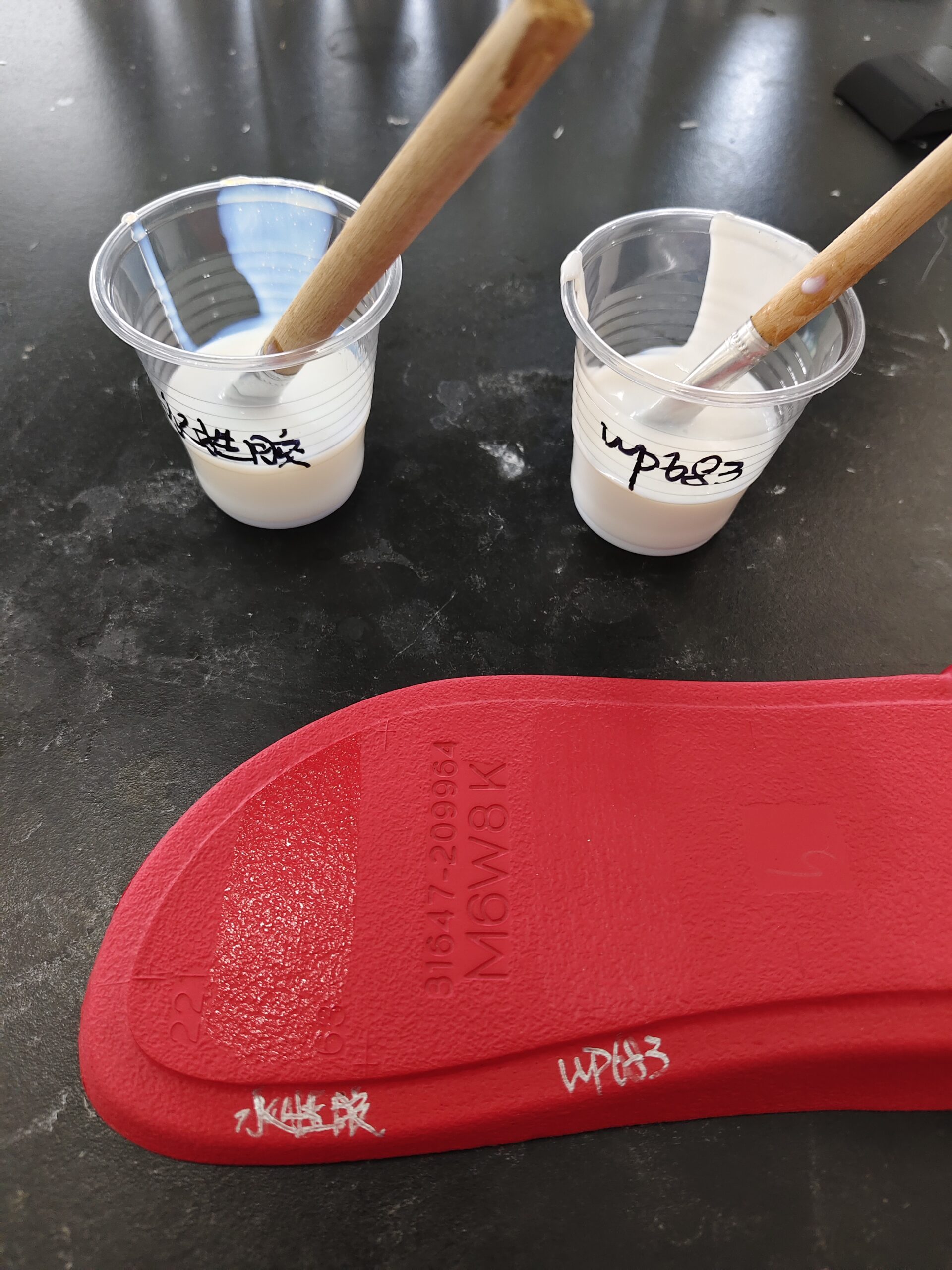
Left: standard water-based PU glue. Right: HELEY WP683. The photo shows how the coats look on this board. It does not measure glue use or bond strength.
WP683 brings two key aims to a trial: a clean look and a water-based formula. To check its glue-saving benefit, use the same shoe material and coat area for both glues. Then compare glue marks, glue used per good pair, and cleanup work.
4. Drying can slow the whole line
If the new glue needs more dry time than the oven gives it, the next work station may have to wait. The factory may need to change line speed, oven settings, or the space between work stations.
This helps explain why a sample shoe may pass while a full shift has problems. A sample can wait until it is dry. A busy line must keep moving.
5. Pressing and checks may need to change
Press force and press time may need new settings. Teams should test bond strength on parts that take stress. They should also check glue marks on parts that buyers can see.
Keep bond test results and appearance checks apart. That makes it easier to find the cause of a problem.
6. Cost must be counted per good pair
A pail price tells only part of the story. Count glue, primer, oven power, output, waste, and rework for each good pair. Count solvent use in primers and cleaners when you review emissions.
For a wider list of line checks, see SATRA’s guide to switching to water-based adhesives.
A smooth switch takes more than a new glue. Shoe parts, dry time, press settings, and quality checks must work together. For styles that need a clean finish, HELEY WP683 offers a water-based option with far less visible marking in the test photo. It also aims to use less glue. A fair line trial can show how much it saves on your shoe. To plan a test, contact HELEY about WP683.
