
Why Are Water-Based Adhesives Getting More Attention?
As global environmental requirements continue to increase, more and more footwear manufacturers are considering replacing traditional solvent-based adhesives with water-based adhesives.
Compared with solvent-based adhesives, water-based adhesives usually offer advantages such as lower VOC emissions and reduced use of organic solvents.
However, many companies misunderstand the transition process.
A common misconception is:
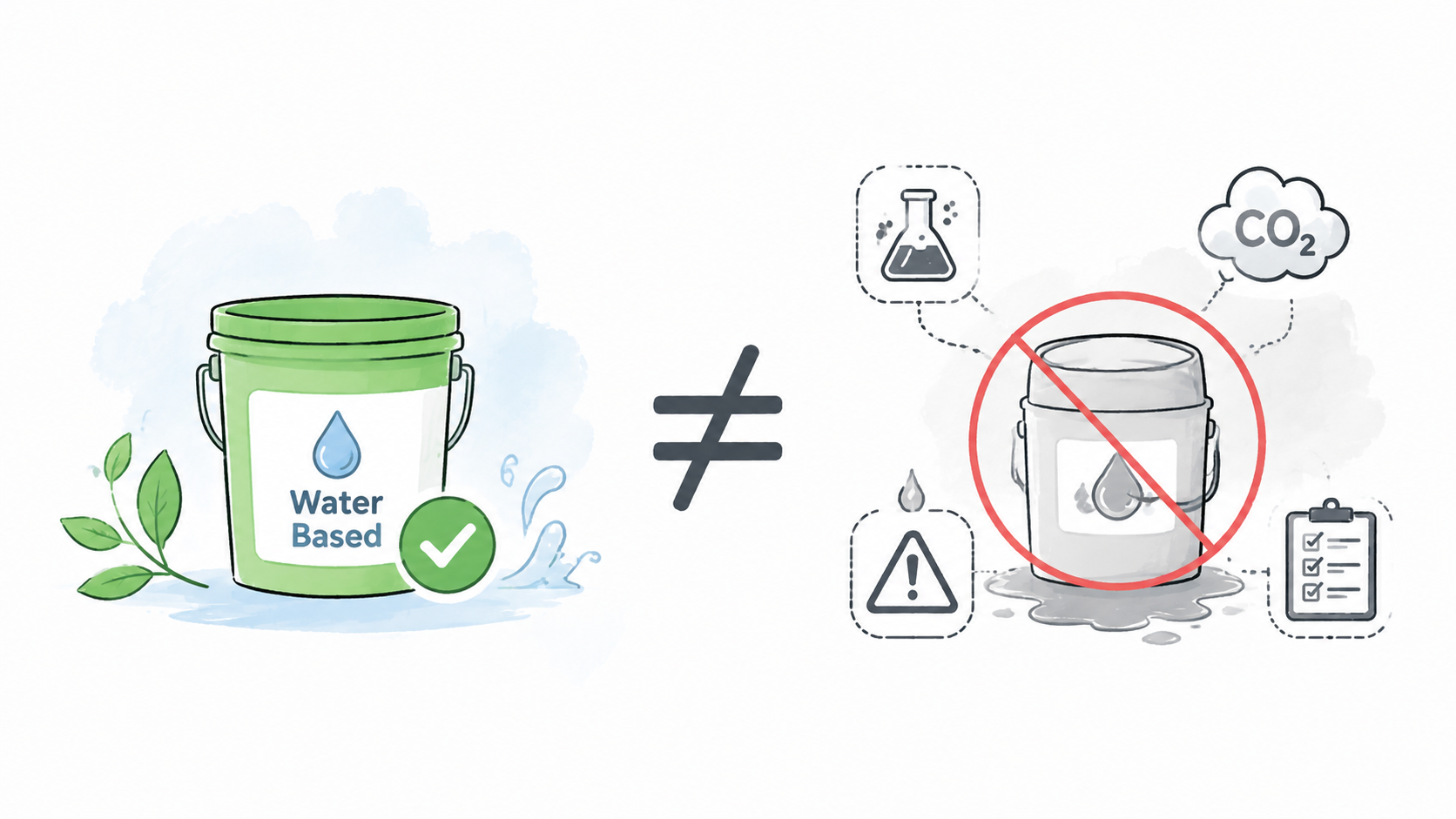
Switching to water-based adhesives automatically means meeting all environmental requirements.
In reality, changing to water-based adhesives is not only a change of adhesive type. It also involves changes in regulatory requirements, customer audits, and production management.
The following three compliance traps are often overlooked during the transition process.
⸻
Environmental Misunderstanding: Water-Based Adhesives Do Not Mean “No Environmental Requirements”
1.Focusing Only on VOC and Ignoring Overall Chemical Requirements
Companies often think:
“Lower VOC means we already meet environmental standards.”
However, during customer audits, companies usually need to manage the complete chemical requirements, including:
* Restricted substances requirements;
* Hazardous material control;
* Material declarations;
* Test reports and documents.
VOC is only one part of the overall environmental requirements.
For footwear and textile supply chains, chemical management programs such as ZDHC provide guidance on reducing the use of hazardous chemicals and improving chemical transparency.
⸻
2.Ignoring Other Materials in the Water-Based System
Water-based adhesives are usually not used alone.
In actual production, the bonding system may also include:
* Primers;
* Hardener;
* Cleaners;
* Other supporting materials.
If a company only focuses on the environmental performance of the main adhesive but ignores the whole bonding system, it may still fail to meet customer requirements.
⸻
Standard Conversion Trap: Old Evaluation Methods May Not Work for Water-Based Adhesives
When many footwear factories switch from solvent-based adhesives to water-based adhesives, they continue using the same testing methods as before.
This is a common mistake.
The reason is that the two adhesive systems work differently:
* Solvent-based adhesives mainly rely on solvent evaporation to create bonding;
* Water-based adhesives mainly rely on water evaporation and film formation to create bonding.
Therefore, the evaluation focus may also change.
⸻
1.Using the Old Testing Logic
For example, companies may only focus on:
* Initial peel strength;
* Surface bonding performance.
However, water-based adhesives may require more attention to:
* Drying conditions;
* Adhesive film formation;
* Long-term bonding stability.
⸻
2.Ignoring Changes in Customer Audit Requirements
When brand customers review new materials, they may focus not only on product performance but also on:
* Environmental declarations;
* Chemical information documents;
* Supplier management systems.
Without confirming these requirements in advance, companies may face a problem:
The adhesive performance is qualified, but the product cannot enter the brand supply chain.
⸻
Management System Trap: Changing the Adhesive Without Changing the Management Process
In many cases, water-based adhesive transition failures are not caused by the adhesive itself.
The real problem is that the management process still follows the old solvent-based adhesive system.
A systematic environmental management approach, such as ISO 14001, helps companies manage environmental responsibilities through structured processes and continuous improvement.
⸻
1.SOP Still Uses Old Standards
For example:
* Storage requirements;
* Usage time;
* Drying judgment;
* Application parameters.
Without updating the standards, operators may continue using old experience and methods.
⸻
2.Insufficient Employee Training
Water-based adhesives require different operating methods compared with traditional solvent-based adhesives.
Employees need to understand:
* Adhesive thickness;
* Drying condition;
* Pressing time;
* Problem identification.
Otherwise, the result may be:
“The adhesive has changed, but the process has not.”
⸻
3.Poor Supplier Document Management
Companies also need to update and organize:
* TDS;
* SDS;
* Test reports;
* Customer audit documents.
Without proper document management, future audits and product traceability may become difficult.
⸻
How to Avoid Failure When Switching to Water-Based Adhesives?
When switching from solvent-based adhesives to water-based adhesives, companies should not only ask:
“Is this adhesive environmentally friendly?”
They should also confirm three key questions:
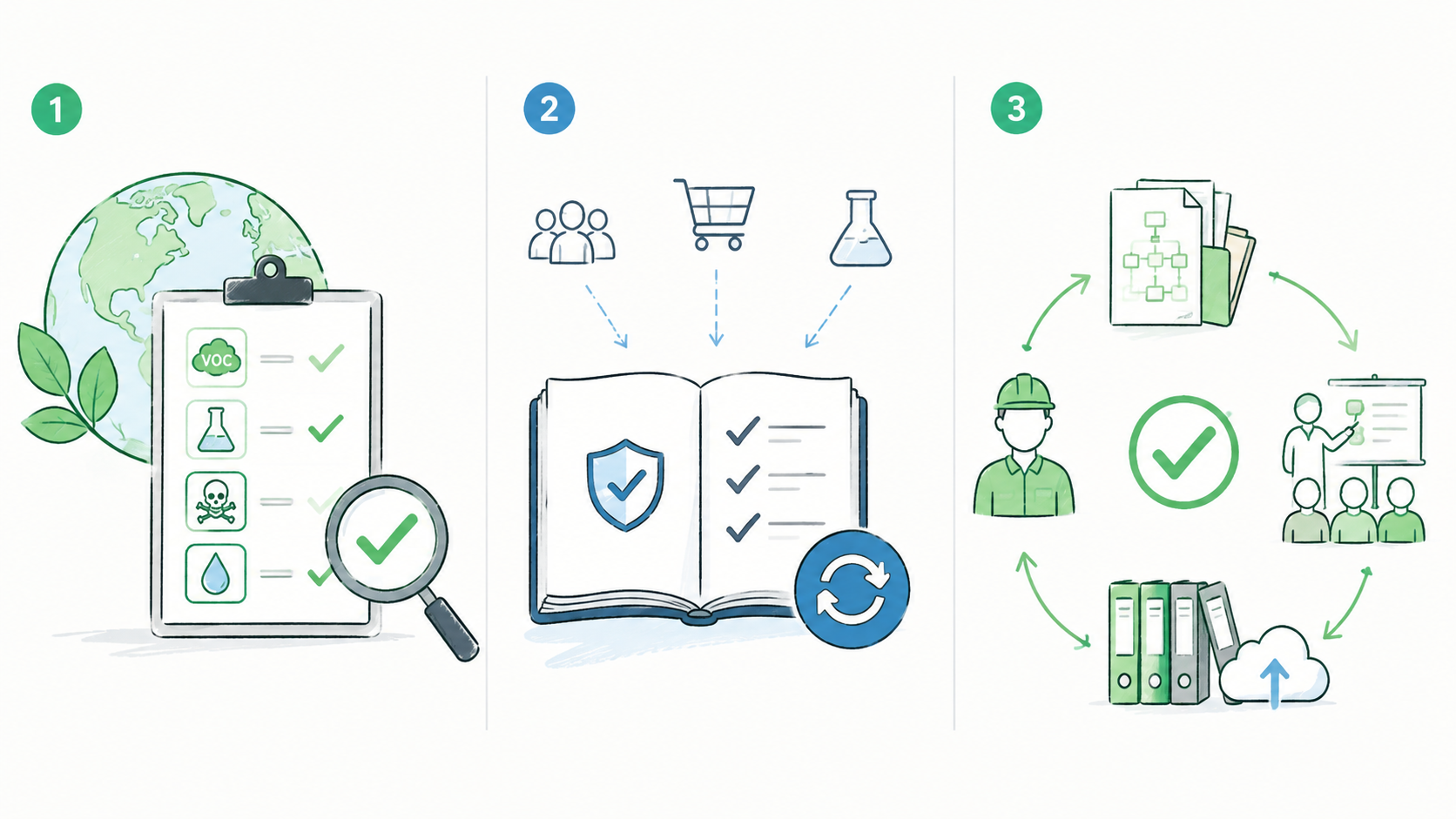
- Does the adhesive really meet environmental requirements? Do not only focus on VOC.A complete chemical compliance check is also needed.
- Are audit standards updated at the same time? Companies should confirm customer requirements, market requirements, and testing standards before switching.
- Has the management system completed the transition? This includes process documents, employee training, and document management.
⸻
الخلاصة
Switching from solvent-based adhesives to water-based adhesives is an important step as environmental requirements continue to increase.
However, a successful transition is not simply about replacing one adhesive with another. It requires a complete upgrade of materials, standards, and management systems.
Companies need to avoid three common traps:
* Treating water-based adhesives as “automatically compliant”;
* Applying old standards directly to new materials;
* Managing new materials with an old system.
Only by completing the transition in materials, processes, and management can water-based adhesives become a stable and reliable long-term solution.
With nearly 30 years of experience in adhesive technology, Heley Chemical Technology focuses on providing professional adhesive solutions for the footwear industry. We help customers optimize bonding systems, improve production stability, and meet changing market requirements through reliable products and technical support.
From adhesive selection to process improvement, Heley works with partners to build stronger and more sustainable bonding solutions.