
Choosing a cold-bonding PU adhesive affects more than the price on a purchase order. It also affects how parts move through the factory, how well materials bond, and how the finished shoe looks.
For shoe factories, brands, and buyers, four factors matter: process fit, bond strength, appearance, and cost.
1. Cold-Bonding PU adhesive:process Fit
Start With the Current Glue
Whether “no heating needed” changes the work depends on the current process.
| Current option | What to compare with 78S2 |
|---|---|
| A standard PU glue that needs heat activation | Can the heating step be removed while meeting leather bond needs? |
| A yellow glue or grafted adhesive already used without heat | Early bond strength, adhesion to leather, and resistance to yellowing |
Some yellow glue and grafted adhesive processes used for bags and handbags already work without heat. In these cases, compare other product features. Shoe factories should also start with their actual glue and bonding task.
Match the Glue to Daily Work
HELEY 78S2 is a cold-bonding PU glue. It needs no heating and has good adhesion to leather. For suitable material pairs, it offers an option when reviewing a process that uses heat activation.
Check when the coated parts can be joined, whether the current press suits the job, and when parts can move to the next task. Confirm surface prep, drying, and pressing needs for each material.
2. Bond Strength: Test Readings and Sample Results
Early Strength Helps Hold Fresh Bonds
A newly joined leather part may soon move to another station. If it shifts or lifts, staff may need to adjust it again.
Strong early bonding is one of 78S2’s product features. To compare this property, keep the time from joining to testing the same. SATRA TM422 measures peel strength soon after a bond is made. The force screenshots below do not state this time, so they are presented as separate pull-test records.
Read the Peak Force Alongside the Sample Photos
The lab supplied sample photos and matching force readings for 78S2 and a yellow glue. Together, they show the recorded load and the visible state of each sample.
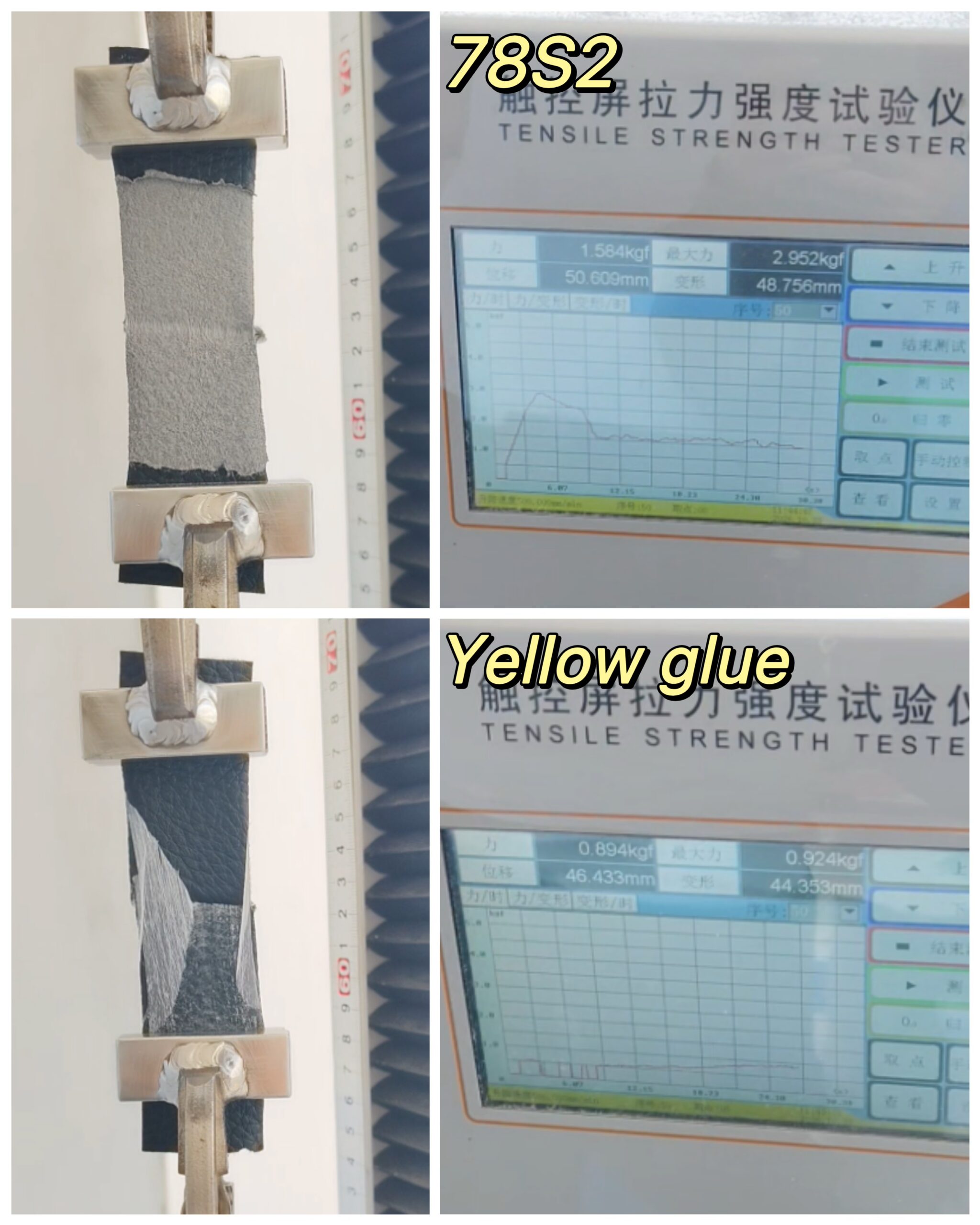
For a more complete bond assessment, SATRA TM401 describes measuring peel force per unit width and assessing the type of bond failure.
3. Appearance: Yellowing Comparison
A Strong Bond Still Has to Meet Visual Needs
Color changes can affect light shoe materials, visible edges, and exposed glue lines. Brands should define these visual needs when choosing glue and assess them separately from bond strength.
Better resistance to yellowing than yellow glues or grafted adhesives is one of 78S2’s product features. The lab photos below give buyers and product teams a visual point of comparison.
What Do the Comparison Photos Show?
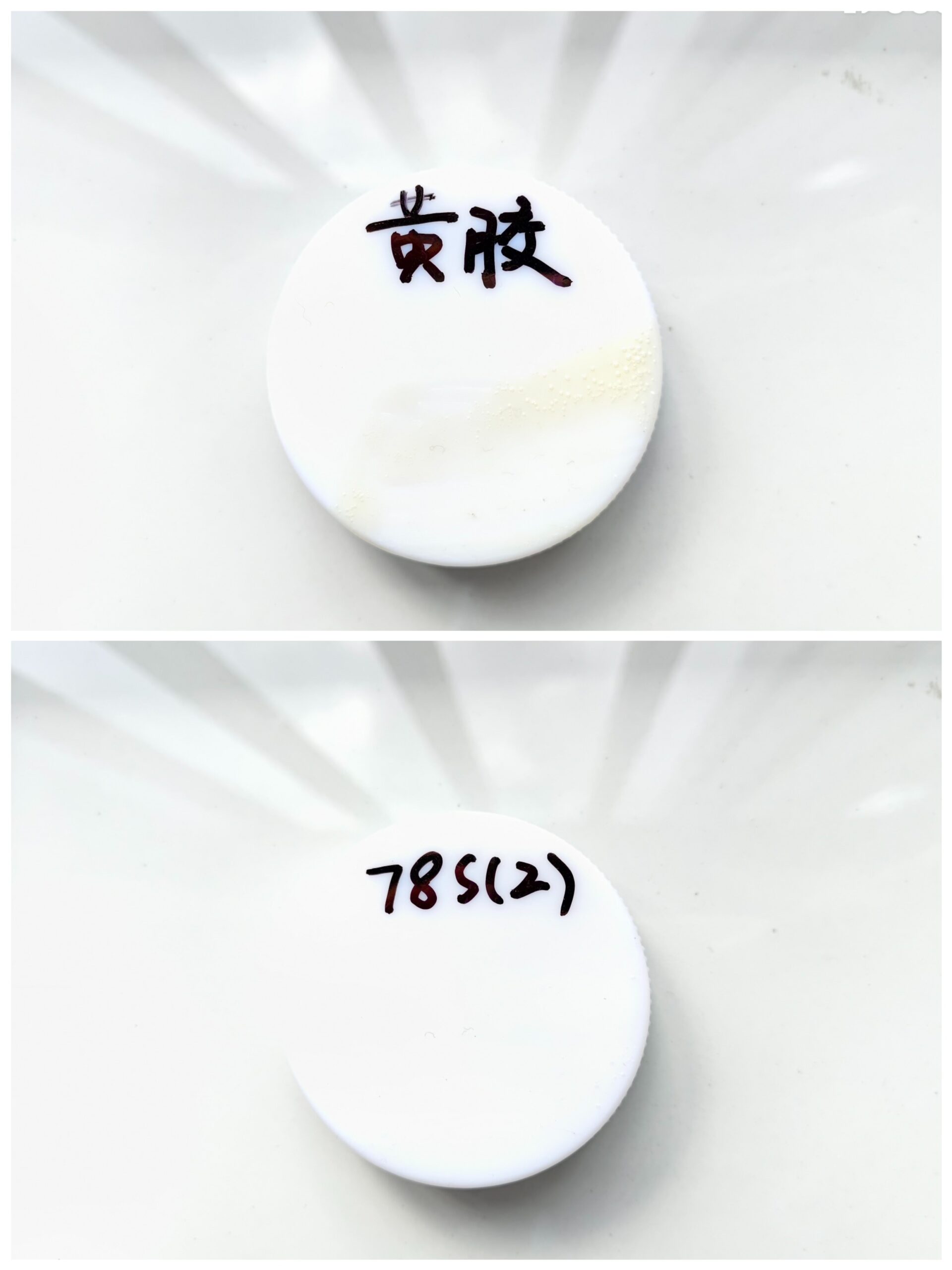
Figures 5 and 6: lab-supplied yellowing comparison photos of yellow glue and 78S2.
The coated area of the yellow-glue sample shows a pale yellow band. The 78S2 sample does not show a similarly clear band. In these photos, yellow marks are less visible on the 78S2 sample.
This visual difference matters when screening glues for light-colored parts. The photos show the samples’ current appearance. A yellowing grade or a claim about long-term performance also needs the starting state, aging method, test time, and color-change records.
4. Application Cost: From Glue Price to Production Cost
Move From Price per Kilogram to Cost per Accepted Pair
Compare the same shoe design, bonding task, and quality target. Add glue and supplies, energy, normal labor, and extra repair and scrap losses. Divide this task’s total cost by the number of accepted pairs.
Count each cost only once. If the old process already works without heat, do not add savings for removing a heating step. Use actual changes in repair and scrap rates to measure the value of better bonds or appearance.
Check the Gains in a Small Production Trial
Lab results help screen options. Factory records show the gains in daily work. In a trial, track glue use, work time, and the share of pairs that pass the first check. Compare them with the current process.
A faster workstation may not raise output across the whole line. Time saved may help with style changes, repeat orders, or more batches. These records help show whether 78S2 suits the factory’s orders and scale.
Conclusion: Turn Material Performance Into Reliable Production
A glue’s value depends on how well it meets process, bond, appearance, and cost needs in daily work. These force records and photos give a starting point for assessing 78S2. The next step is to test the factory’s own shoe materials and check whether the results can be repeated in production.
If you are choosing a cold-bonding PU adhesive for leather, share your material samples, current glue, and production needs with HELEY. Focused sample tests and a small production trial can help match the glue to your materials and production needs.
Share your material samples and production needs with HELEY to discuss a suitable bonding solution.